Today is our last day in Andong, and so far it’s been lovely. Situated in east-central South Korea, the city of Andong is in the province of North Gyeongsang (Gyeongsangbuk-do/경상북도), at the geographic and cultural heart of the country.
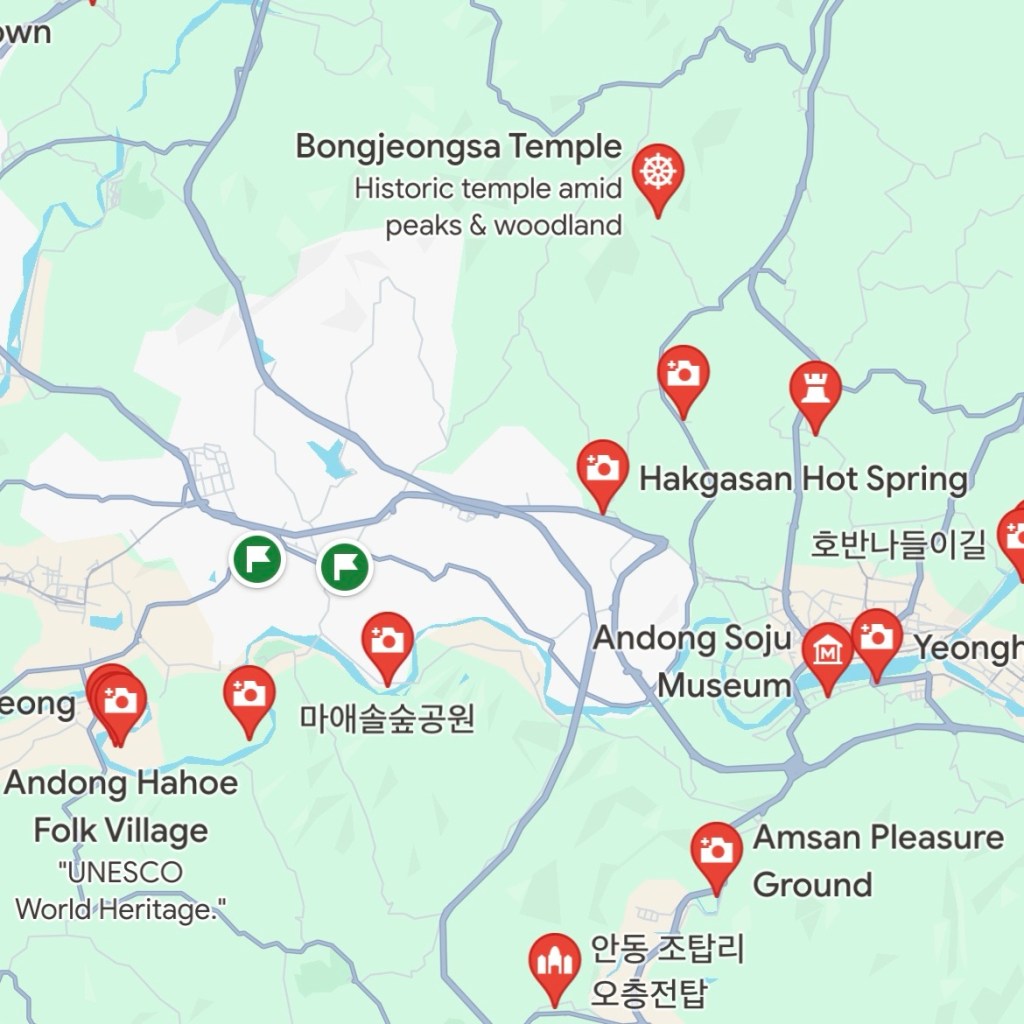
Gyeongsang province is home to just under a quarter of South Korea’s total land area, and is famous for its rich heritage as it was the homeland of the ancient kingdom of Silla (신라), which existed from about 57 BCE to 935 CE. To put that time in perspective, in 935, the Byzantine Empire was in full swing, Western Europe was still divided in to medieval feudal kingdoms, and the Confucianist, Buddhist Tang Dynasty ruled over China.
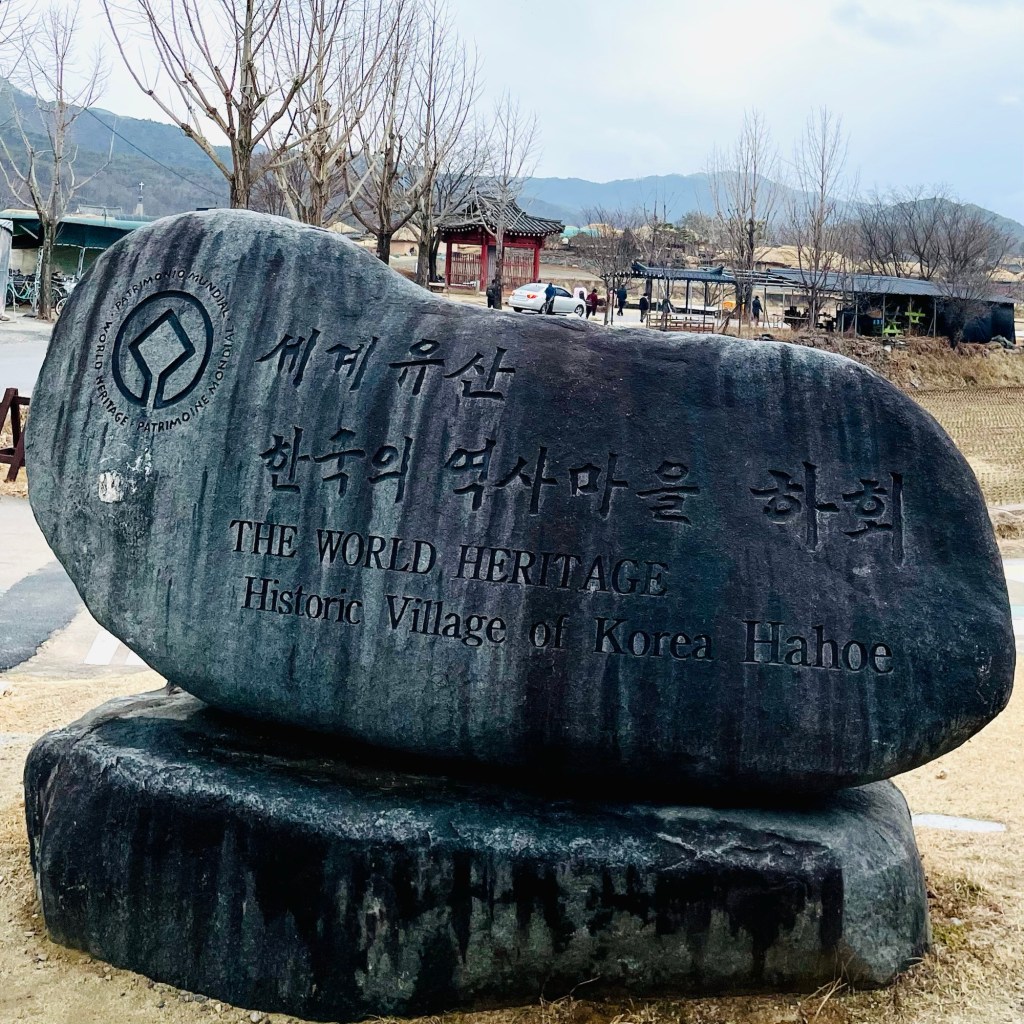
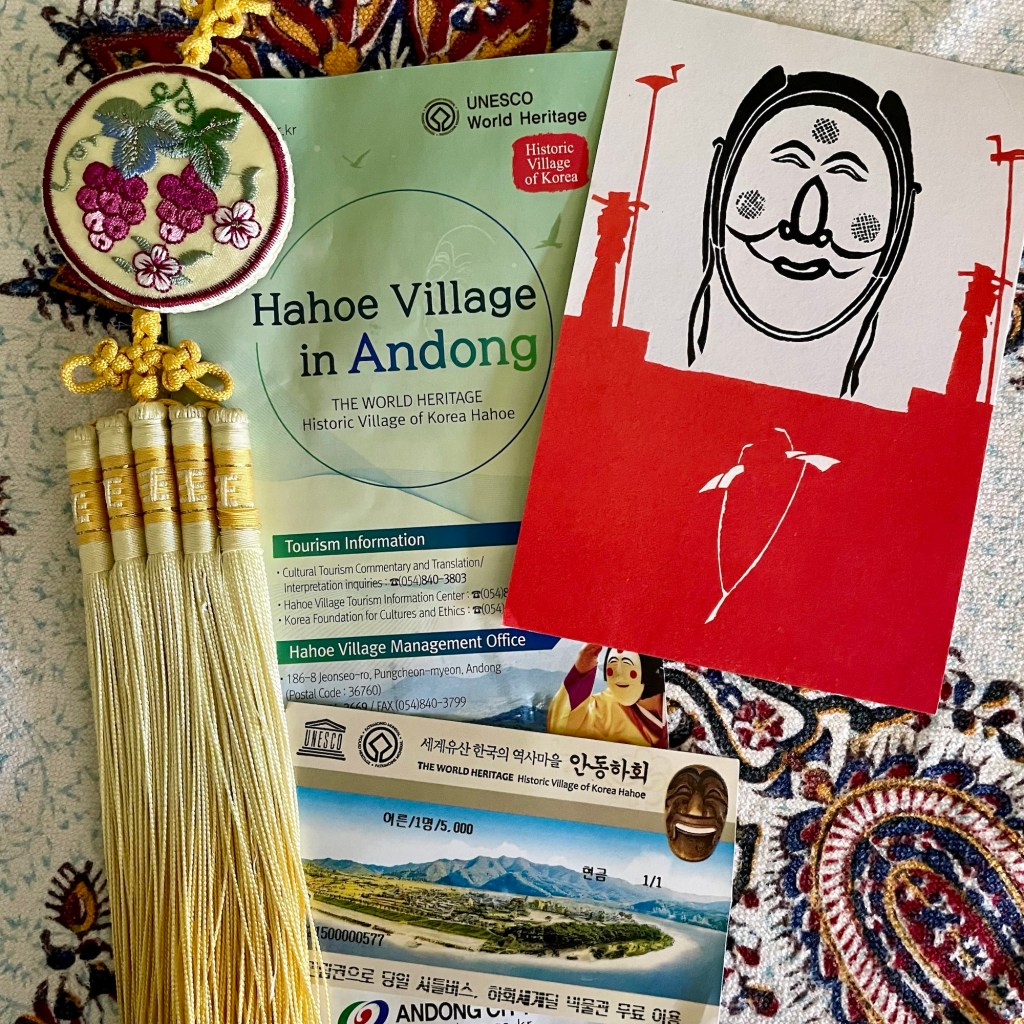
One of the highlights of my trip was yesterday’s jaunt to the UNESCO Hahoe folk village (안동하회마을) at the western outskirts of Andong. The bus ride to Hahoe was just over an hour each way from the center of Andong, and we passed some iconic Korean vistas along the way; fallow rice fields and in-season apple orchards with fruit bigger than my fists clenched together; jagged Taebaek mountain peaks at the eastern horizon rim the fertile basin.
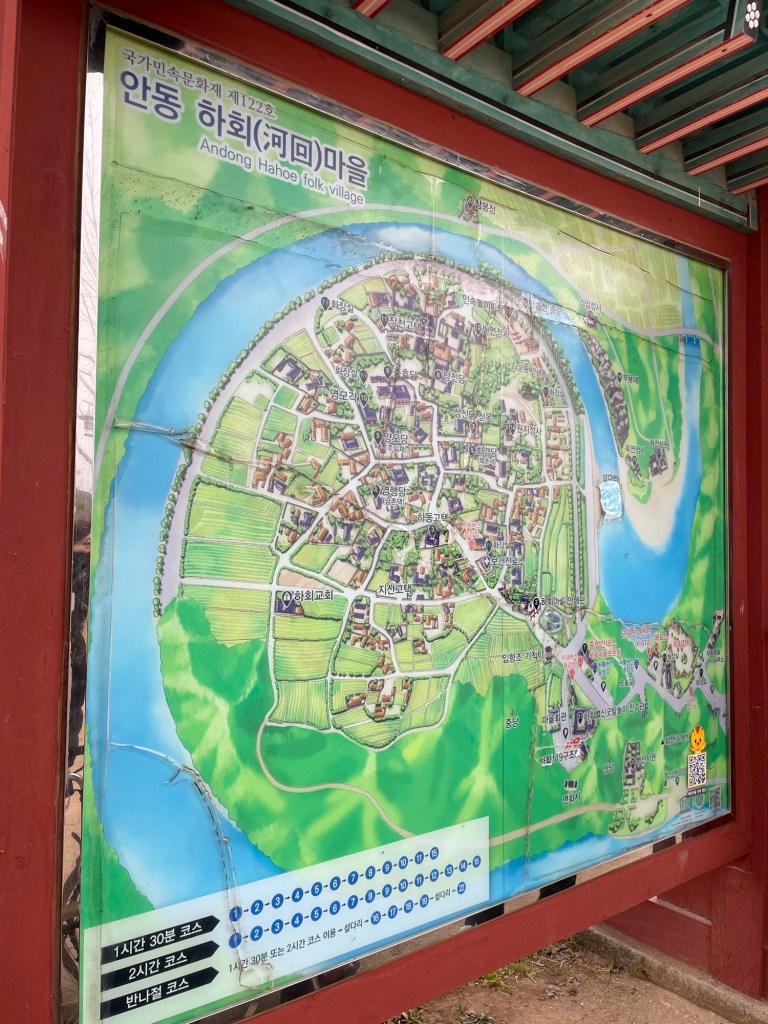
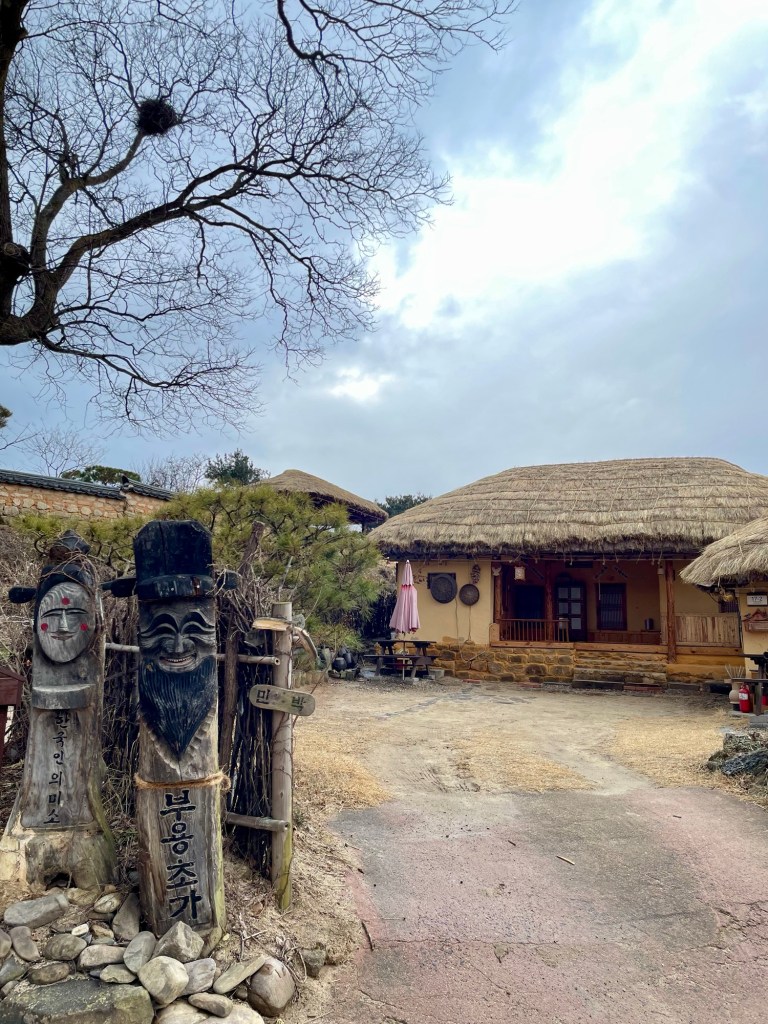
The village was founded in the Joseon dynasty around the 14th-15th century and preserves the architectural styles of that era. Thatched-roof huts of the peasantry and tile roofs of the aristocracy are in close proximity, not common in other villages of that era. The dwellings are contained within walled compounds linked by pathways. After showing my sister a video, she commented that it’s very maze-like, and I agree that navigating takes some getting used to!
The village is nestled in a bend of the Nakdong river, and it was planned to form a shape resembling two interlocking commas, similar to the taeguk symbol of the national flag. Despite the blustery, sometimes drizzly afternoon, we strolled around for some time soaking in the charm and history of the place. It was a special treat to be here in the off season. Although there were some intrepid folks like us, braving the elements for their culture fix (not just Koreans, but some Europeans, too), the scene remained tranquil and hushed, enough that I could hear the wind blow and faint chimes ring out the sound of enlightenment.
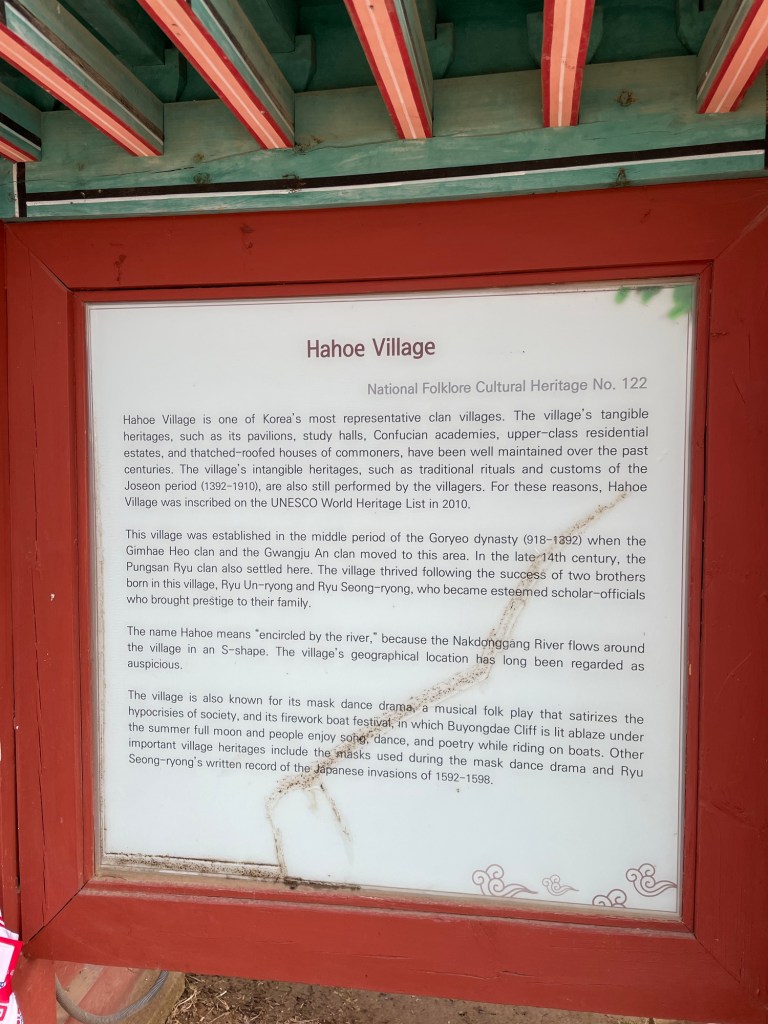
What makes this UNESCO world heritage site special is not only its physical presence and remarkable preservation, but some may be surprised to know that people still live here. Many of the residents are members of the Ryu clan (류) who have lived here since the 1400s. There are about 127 households in Hahoe Folk Village. Some of them still have a jongga or head of the family and practice ancestor worship in the Confucian way.
I wondered how it must feel to have the world stroll by daily, to gawk and photograph your home. Unfortunately I didn’t chance upon any of the locals this day, as they no doubt had the good sense to stay dry indoors.
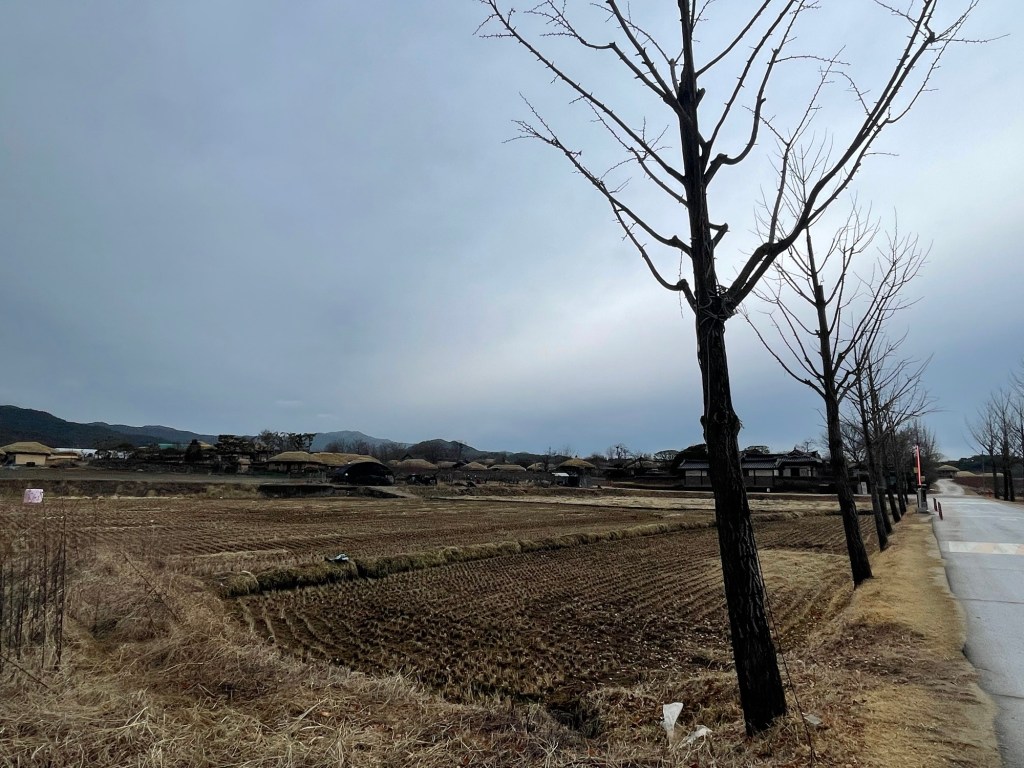

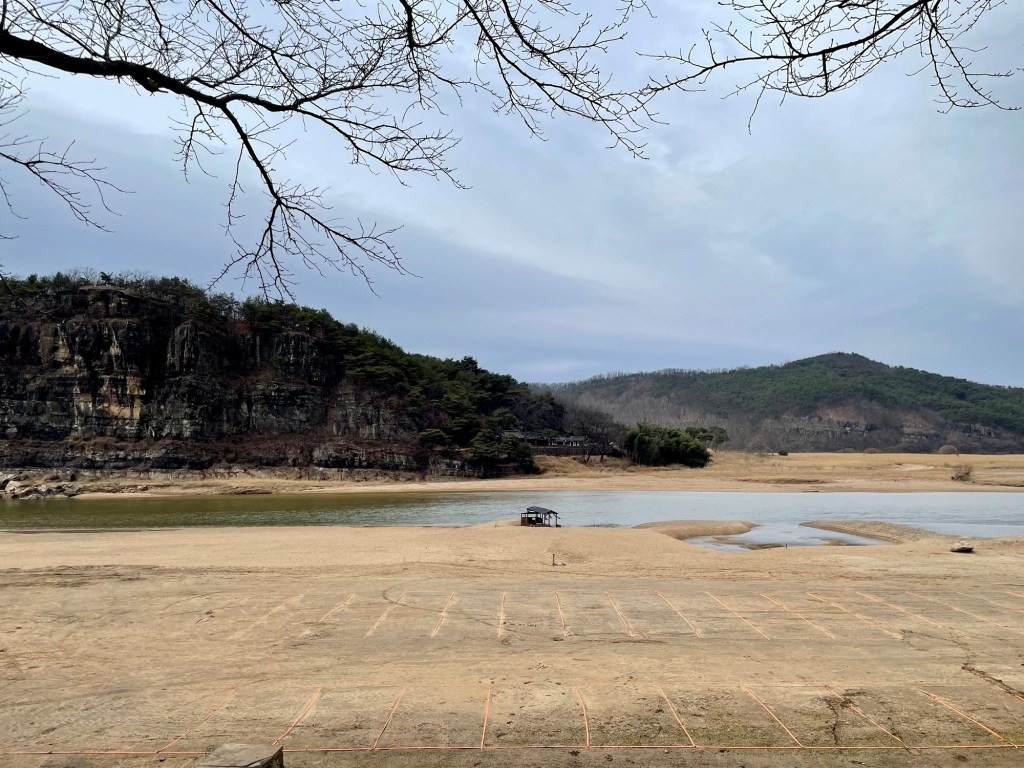


The village and surrounding region are replete with farms, but I learned that a little less than 20% of Korea’s land is actually arable. The majority of that arable land is given to rice farming. Andong and its surroundings are well-known for apples, melons, Asian pears, and persimmons.
Andong is known for some specialty dishes, too. One of the best-loved is Andong jjimdak (안동찜닭), a variety of chicken noodle stew that is simmered in a salty-sweet soy sauce. It is one of my absolute favorites, and I ate a huge platter of it. One thing I have noticed is the food of Andong tends to be less spicy than in the south, where gochujang, and chilis in general, are used liberally. I wonder if it has to do with preserving food heritage. Long ago, Korean food was not at all spicy; black pepper was used sparingly in ancient “haute cuisine.” That changed of course when the chili was introduced to the Far East (you can read my musings on chilis in a previous post).

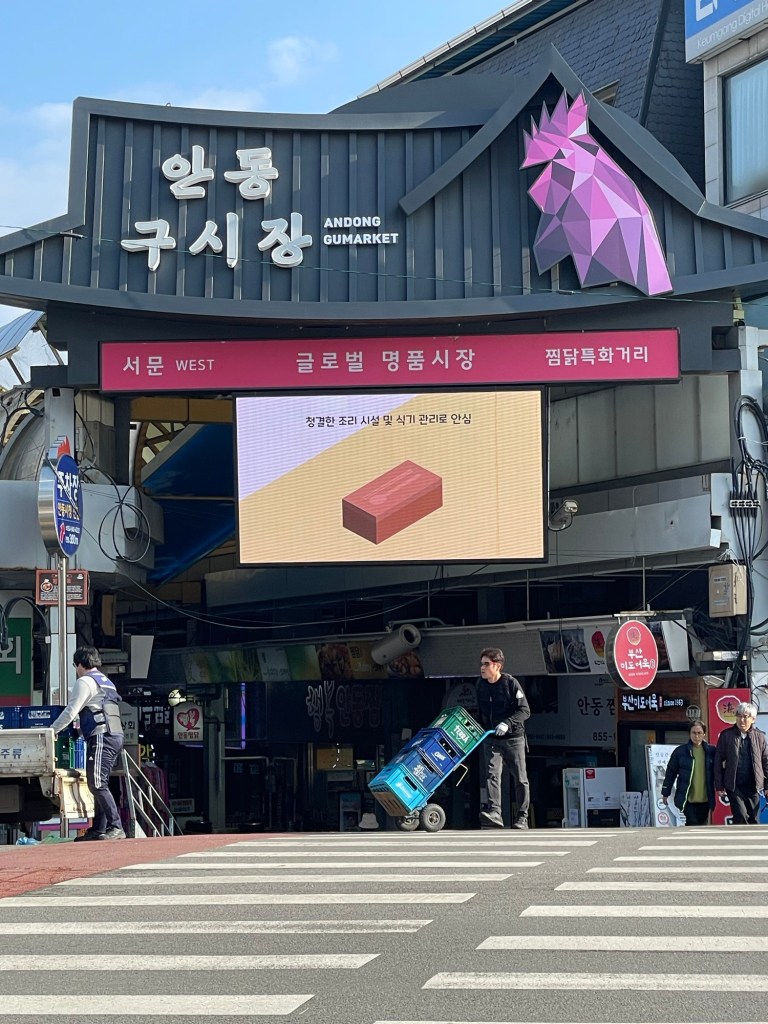

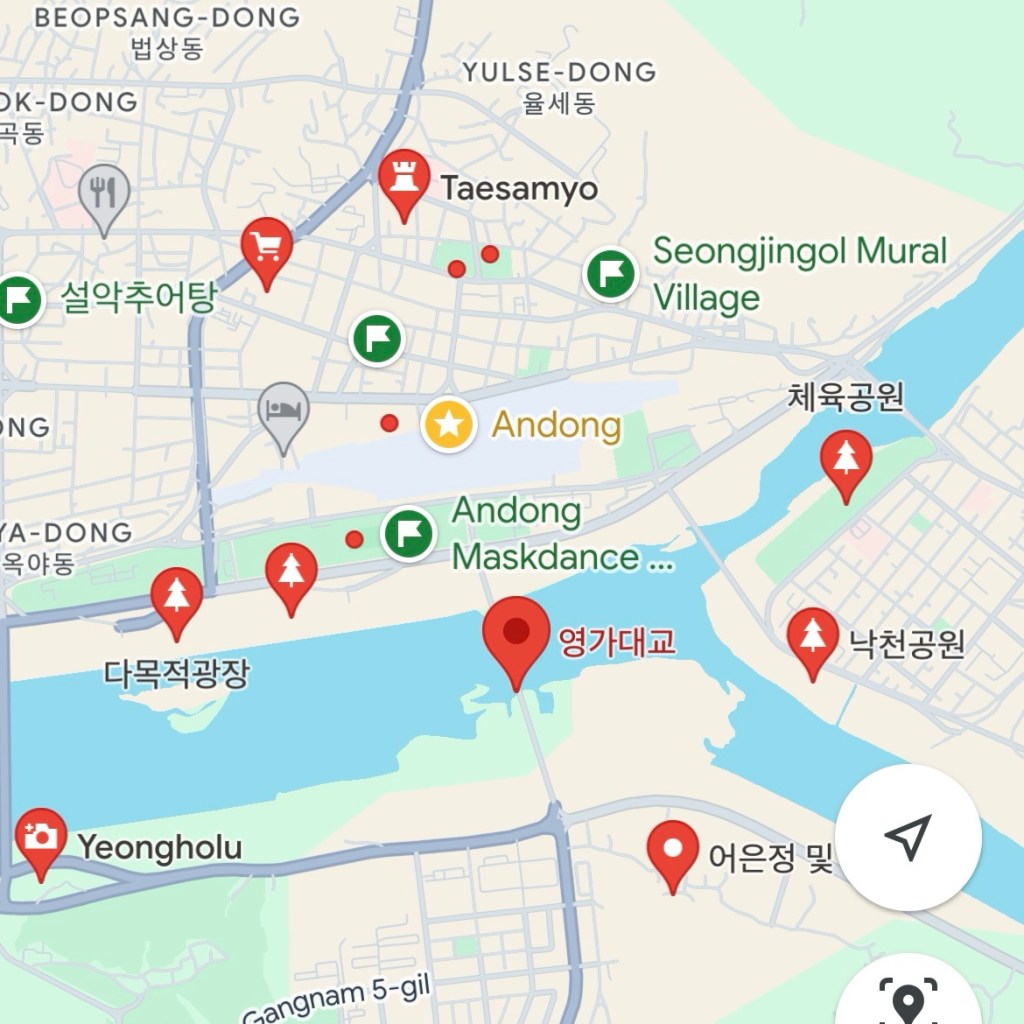
I was also able to explore some of the treasures of downtown Andong itself, and did so primarily on foot, as I had the good fortune to book a room close to the center of town. When I arrived, I took a bus from the train station to the Old Market area. I immediately plunged into the market scene and walked from west to east admiring the goods and buying a few trinkets, including a bottle of sweet white wine made from Andong grapes. At the east end, I popped into Mammoth Bakery, a local favorite that sells hearty breads, fruit pastries, and makes a nice cup of coffee.

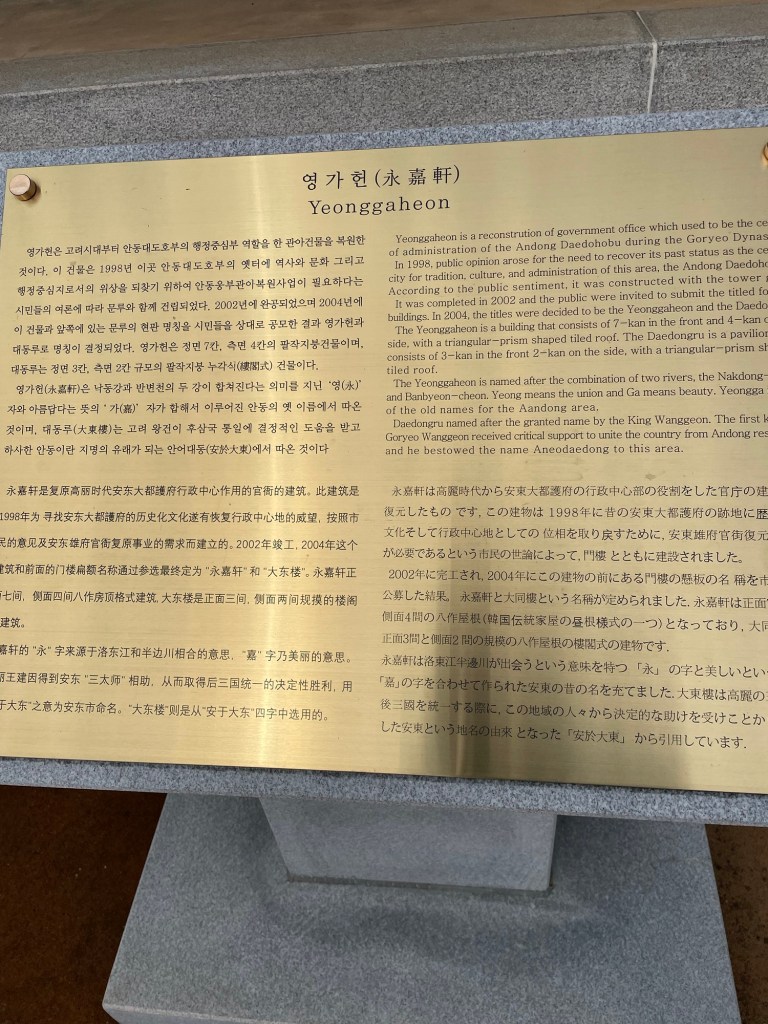
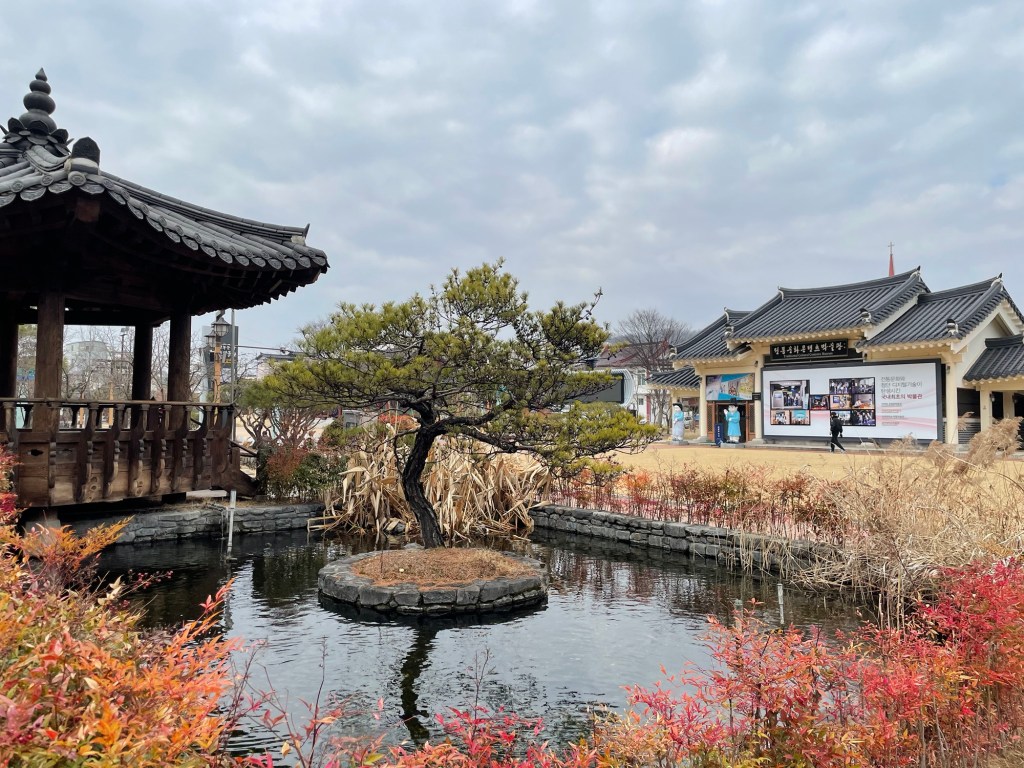
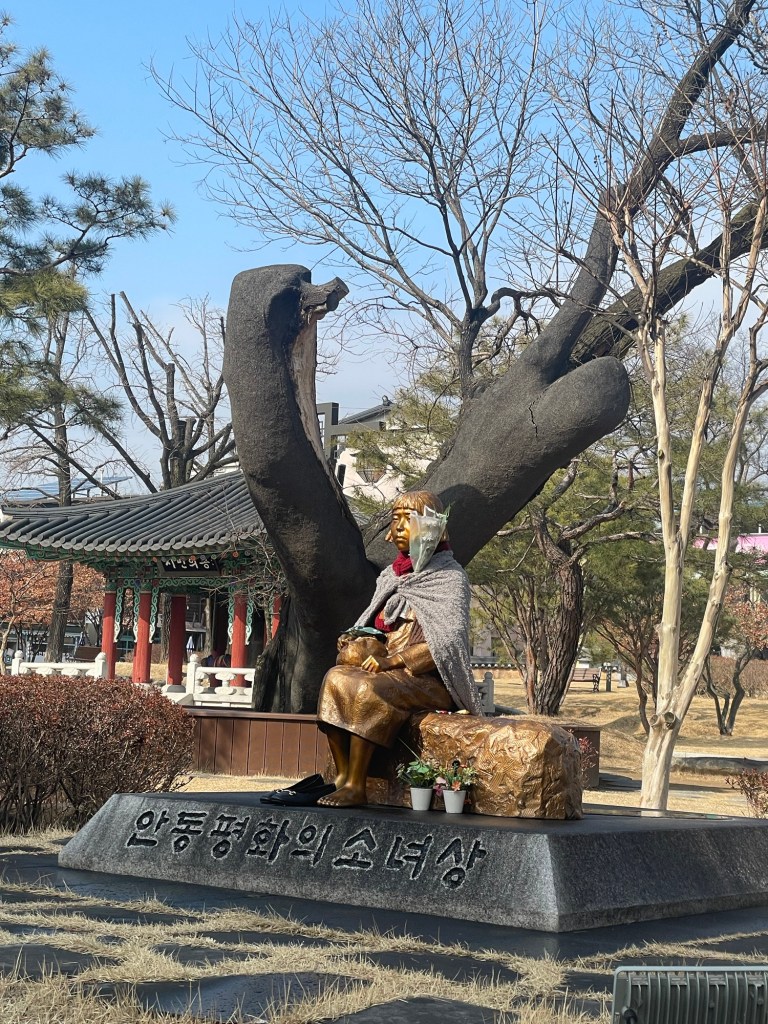


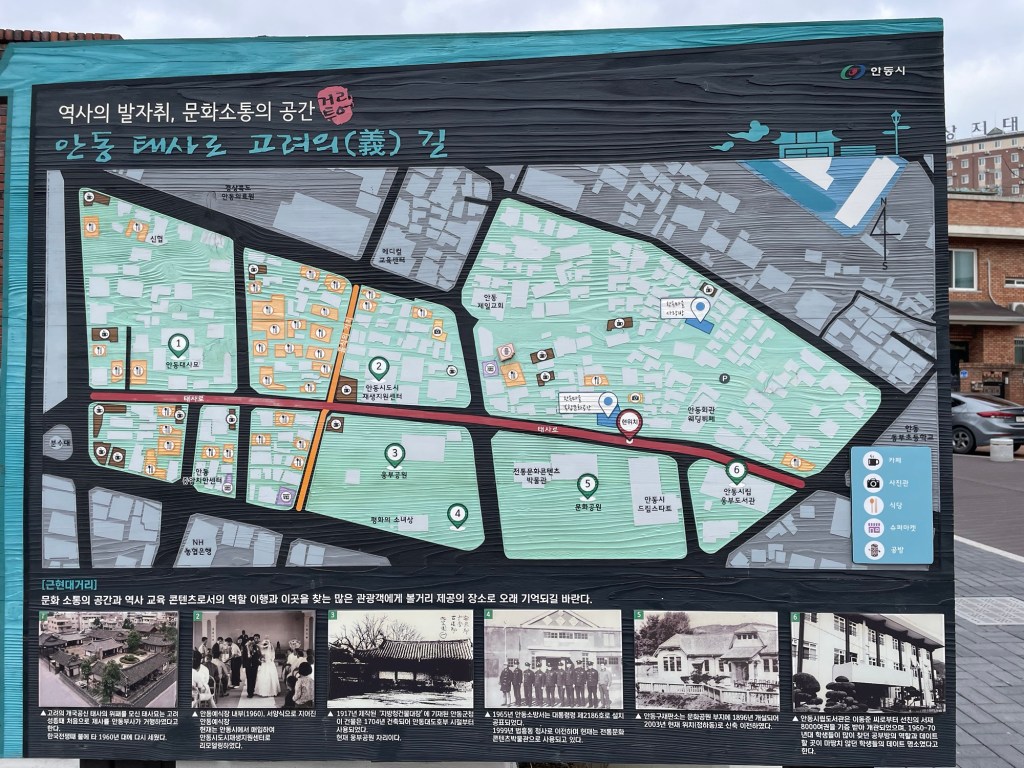


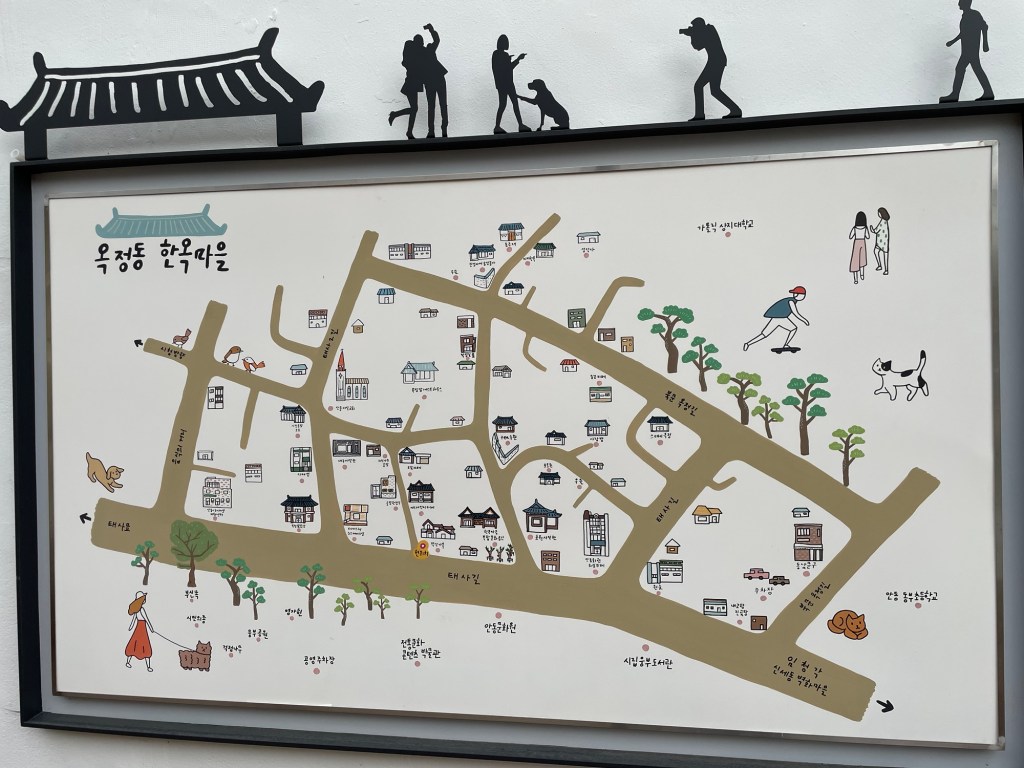

All this time, I wheeled my boy Bodhi around in his carrier, so as not to disrupt anyone while I shopped for food. After we left Mammoth Bakery, though, my pupper was ready to get walking, so we headed straight for Woongbu Park and the surrounding traditional buildings and houses. I wasn’t able to go into the Traditional Cultural Contents Museum, since I had my boy with me, but I’ve made a note to visit it on my next trip.
An important festival (that will also be on my list for next time) is the Andong Mask Festival, which typically runs for 10 days in the early fall. One of the biggest cultural festivals in Korea, it’s packed with activities, shows, and performances that happen all around the city.
Masks play a big role in Korean culture. In the past, different kinds of masks were used for various purposes such as war, ceremonial and shamanistic events, and theatre. The modern festival evolved from being mainly shamans performing ceremonies, to an occasion where common people could join, and took the rare opportunity to make fun (with masks, of course) of their “betters” – like monks, noblemen, and government officials. I have not yet attended this event, so I wonder if any part might be reminiscent of Carnivale or Mardi Gras?
These few days in Andong have been amazing. I learned so much, rekindled my appreciation for this time and place, and found the locals to be unfailingly kind, welcoming, and curious about me and why I chose to visit. I am forever grateful that I have opportunities like this to see a slice of life that few others can, and to be an unofficial good-will ambassador in the bargain.
Discover more from The Frill Seeker
Subscribe to get the latest posts sent to your email.

 The Frill Seeker